

What Is a Fever in Children? A Parent Guide
Is a higher fever always more dangerous?
Not necessarily. A child with a higher temperature may be alert, drinking, and comfortable, while a child with a lower temperature may be seriously ill. Consider the whole picture and contact your pediatrician when your child’s behavior or symptoms concern you.
Should I wake my child to give fever medicine?
Usually, sleep is helpful and medicine is intended for comfort. Do not wake a comfortably sleeping child solely to give fever medicine unless your clinician has given you specific instructions. Check on your child and seek advice if they are difficult to wake or seem worse.
Can a fever cause brain damage?
Typical fevers from infections do not cause brain damage. Febrile seizures can occur in some young children, usually with a rapid temperature change, and are frightening but often brief. Call emergency services for a seizure lasting more than five minutes, breathing problems, or a first seizure.
What should I do if the fever returns after medicine?
Fever medicine lowers temperature temporarily; it does not treat the underlying infection. A fever may return when the medicine wears off. Continue fluids and comfort measures, follow the dosing schedule, and call our office if symptoms are worsening or you are unsure what to do.
Fever in children means a body temperature of 100.4°F (38°C) or higher . It is usually a normal immune response to infection, not an illness by itself. Focus on how your child looks and acts, offer fluids, keep them comfortably dressed, and use weight-based medicine only when appropriate.
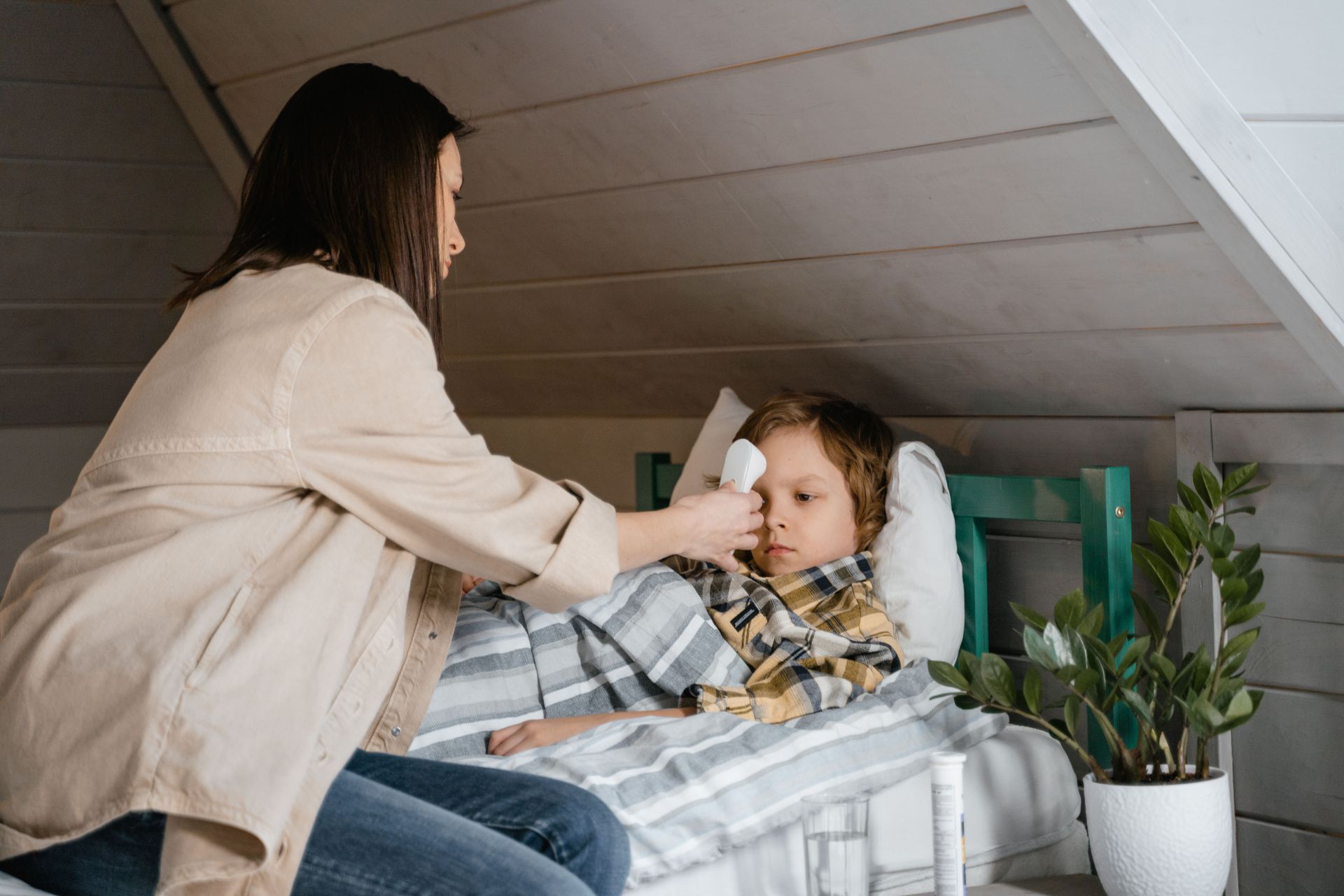
What counts as a fever in children?
A fever is generally a temperature of 100.4°F or higher , regardless of whether it is measured by mouth, ear, forehead, or rectum. Temperature readings can vary slightly by method and device, so use a reliable thermometer and follow its instructions.
Fever is a symptom, not a diagnosis. Many infections—including common colds, influenza, ear infections, and other viral illnesses—can cause it. Fever often means the immune system is responding to an infection. The number on the thermometer matters, but your child’s breathing, hydration, alertness, and overall behavior matter too.
For more guidance about common childhood illnesses, visit Is Your Child Sick? .
Why do children get fevers?
When the immune system detects an infection, it releases signals that temporarily raise the body’s temperature. This change may make it harder for some germs to thrive and helps activate immune defenses. A fever can therefore be a sign that the body is fighting an infection.
However, fever does not tell you exactly what caused the illness or whether antibiotics are needed. Most childhood fevers are caused by viruses and improve with time, rest, and fluids. Your pediatrician can help determine whether your child needs an examination or testing.
How can you keep a child comfortable with a fever?
The goal is comfort and hydration—not necessarily returning the temperature to normal. Helpful steps include:
- Offer frequent small amounts of water, breast milk, formula, or an age-appropriate rehydration drink.
- Dress your child in one light layer and use a comfortable blanket if they feel chilled.
- Encourage quiet rest, but do not force your child to stay in bed if they feel well enough to move around.
- Offer familiar foods if your child is hungry; fluids are more important for a short period.
- Check on your child regularly, including during the night if they seem very ill or symptoms are changing.
Avoid ice baths, alcohol rubs, or very cold water. Shivering can raise body temperature and make your child more uncomfortable. A lukewarm bath may be soothing, but stop if your child begins shivering.
How should fever medicine be given?
Fever medicine is not always necessary. Consider it when your child is uncomfortable, achy, or unable to rest—not simply because the thermometer shows a higher number.
Dosing is based on your child’s weight, not only age. Always check the product label, use the measuring syringe or cup that comes with the medicine, and confirm the correct dose with our office.
Depending on your child’s age and health history, a clinician may recommend acetaminophen or ibuprofen. Ibuprofen is generally not used in babies younger than 6 months unless a medical professional specifically advises it. Never give aspirin to a child or teenager unless directed by a physician.
See our Medicine Dosages , Acetaminophen or Tylenol Dosing , and Ibuprofen or Advil or Motrin Dosing resources. If you are unsure of the right dose, call All Star Pediatrics before giving medicine.
When should you call the pediatrician?
Call All Star Pediatrics for advice if:
- Your baby younger than 3 months has any fever of 100.4°F or higher . Do not wait to see whether it goes away.
- Fever lasts longer than expected, returns after improving, or your child is getting worse.
- Your child is drinking very little, vomiting repeatedly, urinating much less, or has a dry mouth or no tears.
- Your child has significant pain, a stiff neck, a new rash, persistent headache, ear pain, painful urination, or worsening cough.
- Your child has a chronic medical condition, weakened immune system, or a history that makes fever more concerning.
When you call, be ready to share your child’s age, temperature, thermometer method, symptoms, fluid intake, urination, and any medicine given—including the name, strength, dose, and time.
You can schedule an appointment or learn how to reach our on-call provider .
When should a child with a fever go to the ER?
Call 911 or go to the emergency room immediately if your child:
- Has trouble breathing, blue or gray lips, severe wheezing, or pauses in breathing.
- Is difficult to wake, unusually confused, unresponsive, or has a seizure.
- Has a stiff neck with severe headache, a rapidly spreading purple or bruise-like rash, or appears severely ill.
- Shows signs of severe dehydration, such as no urination for many hours, extreme weakness, or inability to keep fluids down.
- Has a serious injury, suspected poisoning, or another emergency along with a fever.
For local emergency guidance and resources, see Emergencies . If you are uncertain whether symptoms are life-threatening, choose emergency care rather than waiting for a callback.
Common questions about fever in children
Is a higher fever always more dangerous?
Not necessarily. A child with a higher temperature may be alert, drinking, and comfortable, while a child with a lower temperature may be seriously ill. Consider the whole picture and contact your pediatrician when your child’s behavior or symptoms concern you.Should I wake my child to give fever medicine?
Usually, sleep is helpful and medicine is intended for comfort. Do not wake a comfortably sleeping child solely to give fever medicine unless your clinician has given you specific instructions. Check on your child and seek advice if they are difficult to wake or seem worse.What should I do if the fever returns after medicine?
Fever medicine lowers temperature temporarily; it does not treat the underlying infection. A fever may return when the medicine wears off. Continue fluids and comfort measures, follow the dosing schedule, and call our office if symptoms are worsening or you are unsure what to do.
Key takeaways for parents
Fever in children is usually an immune response to infection. Measure temperature accurately, focus on hydration and comfort, and remember that medication dosing must be based on weight. Call immediately for any fever of 100.4°F or higher in a baby younger than 3 months. Seek emergency care for breathing trouble, severe dehydration, unresponsiveness, seizures, or a rapidly spreading concerning rash. When in doubt, contact All Star Pediatrics in Countryside, IL for guidance about your child’s symptoms and the correct medicine dose.